㈜웅진 개인정보처리
(다운로드 관련)를 위한
개인정보 수집 및 이용 동의
(필수)
㈜웅진은 다운로드를 통해 해당 서비스를 이용하고자 하는 공공기관, 기업, 개인 등을 대상으로 아래와 같이 개인정보를 수집하고 있습니다.
-
1. 목적
해당 서비스와 관련된 리소스 자료 및 뉴스레터 제공과 이메일 마케팅 활용 -
2. 항목
이름, 이메일, 회사(소속), 직급 -
3. 보유기간
입력일로부터 2년까지 -
4. 귀하는 위와 같은 개인정보 수집 및 이용 동의를 거부하실 수 있으며, 동의를 거부할 경우 당사가 제공하는 다운로드 정보를 제공받으실 수 없습니다.
마케팅 활용 및 광고성 정보 전송을 위한 개인정보 수집 및 이용 동의 (선택)
개인정보의 취급 위탁에
대한 동의 (선택)
개인정보의 국외 이전에
관한 동의 (선택)
Smart Logistics and Warehouse Management Solution
SAP EWM
Woongjin brings proven SAP EWM expertise to unify complex warehouse and distribution operations. With automation and real-time insights, enterprises improve accuracy, cut costs, and scale logistics efficiently.
What is SAP EWM?
SAP Extended Warehouse Management (EWM) is an advanced logistics solution that optimizes warehouse and distribution processes. It manages inventory, inbound, picking, packing, and outbound operations in real time. With SAP EWM, enterprises can streamline logistics, improve accuracy, lower costs, and achieve stable, scalable operations.
Experience Advanced Logistics Processes
Woongjin specializes in Warehouse Management (WM) solutions.
We offer the powerful SAP EWM based on experiences with leading domestic retail companies in Korea.
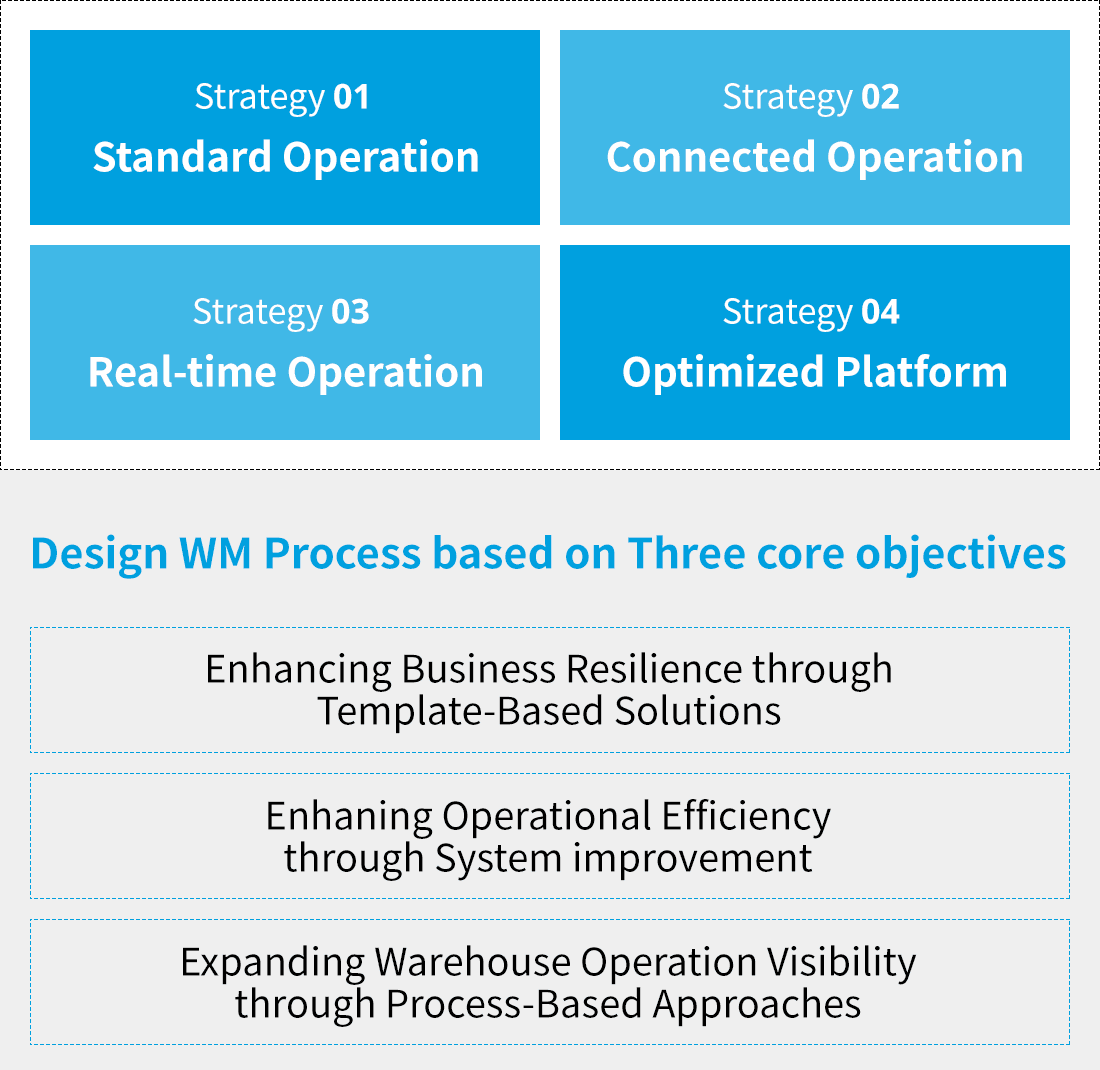
With our unique four driving strategies and three core objectives, you can successfully realize your system into the
To-Be operation model of integrated logistics systems.
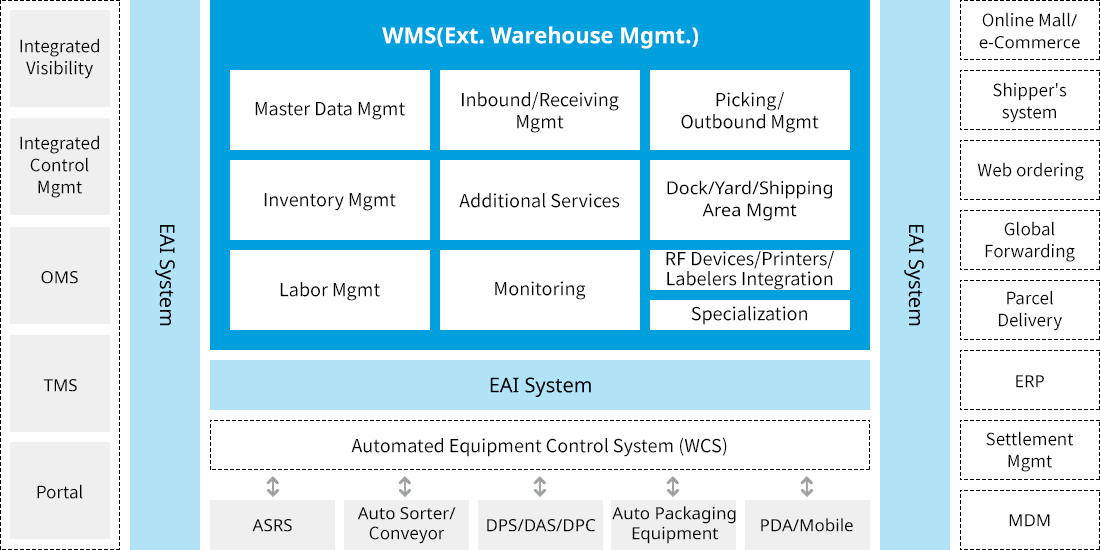
SAP EWM System Architecture
EWM is an extended-solution with the broaden functionality of ERP-WM, which is informed with SAP's 20-year history of stability.
It can be installed on a separate server from ERP and is ideal for managing distribution centers in logistics/retail companies.
With SAP EWM's flexible processes, complex warehouse management can be effectively addressed.
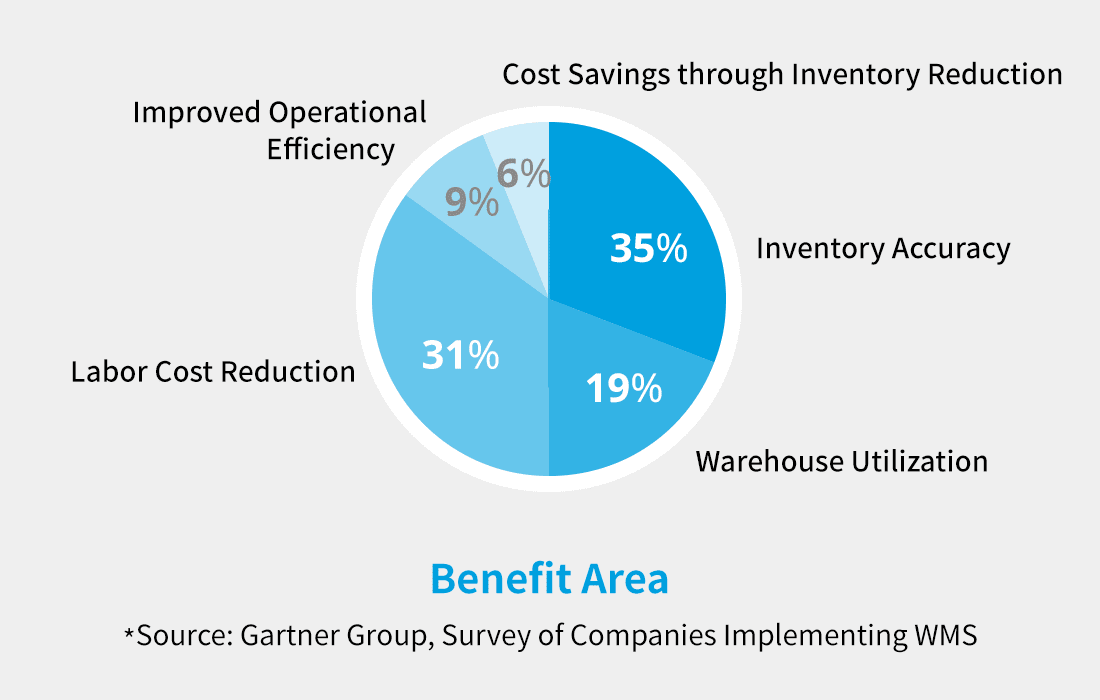
Benefits
The implementation of the EWM system can lead to increased productivity and reduced warehouse costs
at each logistics center.
Standardization of logistics processes can enhance productivity and accuracy while reducing errors.
 Learn More on Youtube

- E-mail : storybyul@woongjin.com
FAQ
References Learn More
-
-

- LG LSP Project
[Project Overview]
LX Pantos, a global 3PL specialist, providing comprehensive Warehousing and Distribution (W&D) services, standardized and uplifted the logistics operations of its affiliates using SAP. Throughout this project, LX Pantos integrated specialized processes for numerous shippers of the 3PL company, making them available for use within the corporate group.
[Significance]
Established a new integrated platform based on SAP for logistics processes, - from order to warehouse/delivery/account management - applying global standard business processes based on the global best practice.
- Upward leveling of logistics operations and applying global standard working processes
- Securing and analyzing data to discover opportunities for logistics improvement -
-
-

- SAP EWM Implementation and Integration
[Project Overview]
This extended warehouse management and logistics automation project, conducted alongside the implementation of SAP’s distribution industry solution, spanned a total of 18 months, including a four-month testing period and a one-month stabilization phase. The solution scope covers SAP’s Extended Warehouse Management (eWM) solution, System Integration (PO) solution, SFA’s automated equipment, and warehouse logistics management solutions, encompassing the entire logistics process from ordering, storage, picking, and shipping to returns and disposal.
[Significance]
- Cross-channel pickup across online and offline channels with location-based marketing
- Streamlined mobile payment options for enhanced user convenience. -
-
-

- SAP WM Implementation
[Project Overview]
BorgWarner, multinational Company based in the United States, sequentially implemented systems for its five offices in Korea. Woongjin developed a standard template, successfully implemented and stabilized it in a rollout format, and continued to oversee operations, maximizing system efficiency.
[Significance]
- Stabilized MRP and successfully established WM, extending its use to the production site.
-