㈜웅진 개인정보처리
(다운로드 관련)를 위한
개인정보 수집 및 이용 동의
(필수)
㈜웅진은 다운로드를 통해 해당 서비스를 이용하고자 하는 공공기관, 기업, 개인 등을 대상으로 아래와 같이 개인정보를 수집하고 있습니다.
-
1. 목적
해당 서비스와 관련된 리소스 자료 및 뉴스레터 제공과 이메일 마케팅 활용 -
2. 항목
이름, 이메일, 회사(소속), 직급 -
3. 보유기간
입력일로부터 2년까지 -
4. 귀하는 위와 같은 개인정보 수집 및 이용 동의를 거부하실 수 있으며, 동의를 거부할 경우 당사가 제공하는 다운로드 정보를 제공받으실 수 없습니다.
마케팅 활용 및 광고성 정보 전송을 위한 개인정보 수집 및 이용 동의 (선택)
개인정보의 취급 위탁에
대한 동의 (선택)
개인정보의 국외 이전에
관한 동의 (선택)
Low-Code/No-Code Platform
for Faster Innovation
Microsoft Power Platform
With Microsoft Power Platform, enterprises can accelerate digital innovation. Woongjin adds proven expertise in ERP and data integration, helping companies build apps, automate workflows, and unlock insights with speed and confidence.
What is Microsoft Power Platform?
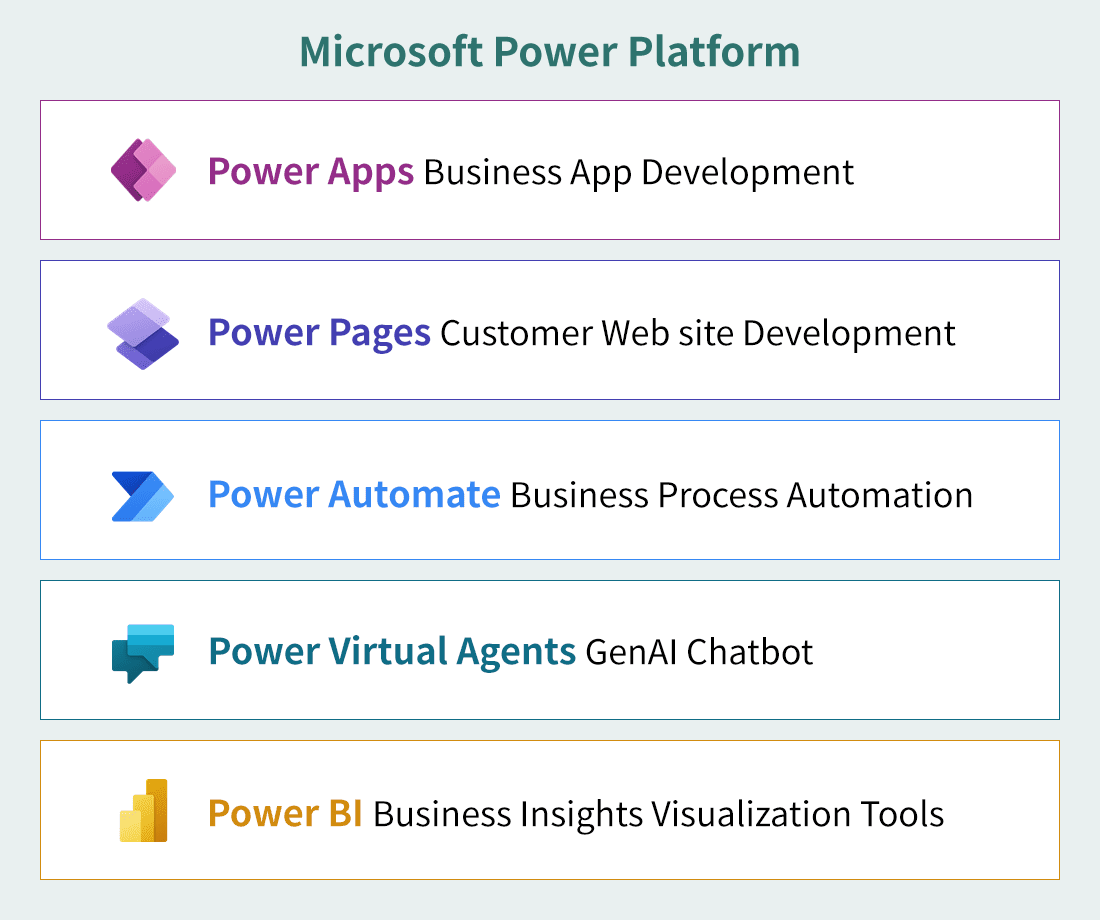
Microsoft Power Platform is a low-code/no-code platform designed for business users and IT teams. It includes Power Apps, Power Automate, Power BI, and Copilot Studio, enabling rapid app development, workflow automation, data analysis, and AI-driven tools. With this platform, enterprises can boost productivity, enhance collaboration, and accelerate digital and AI transformation.
Microsoft Power Platform
Accelerate app development, automate tasks, and visualize data using AI-based tools to minimize repetitive work. Unlock new possibilities by integrating with Microsoft Fabric, Azure, Microsoft 365, and Dynamics 365.
Features
Innovate the entire business area
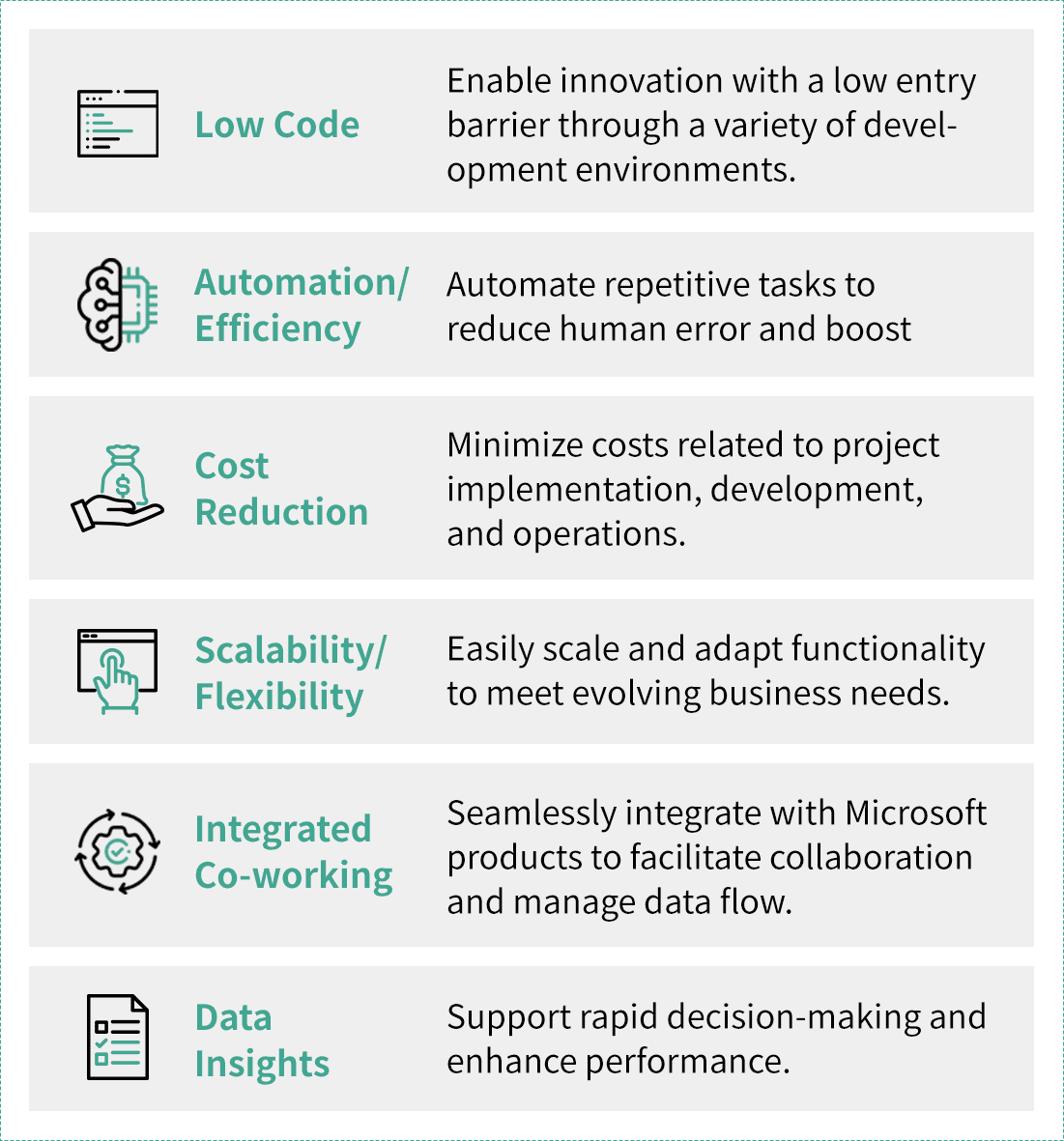
Power Platform can be utilized in the entire business area. It accelerates digital transformation, maximizes the working process, and supports for the data-driven decision making. Experience various advantages that Power Platform offers - reduce the cost, enhance productivity, and reinforce the competitiveness
- Sales/Marketing
-
- Automate invoice processing
- Develop real-time sales status analysis reports
- Develop apps for generating and editing real-time sales data
- Automate customer experience analysis
- Automate social media analysis
- Accounting/Finance
-
- Develop real-time accounting/finance reports
- Automate accounting processes
- Automate voucher processing
- Develop visualized sales analysis and forecasting reports
- Automate budget approval and management tasks
- Manfucturing
-
- Monitor production line in real-time
- Develop management reports
- Automate and visualize manufacturing pipeline tracking
- Automate and visualize inventory and logistics management tracking
- Develop production management apps for employee
- Develop logistics in/out management apps
- Management
-
- Develop M365 usage analysis reports
- Develop automation process monitoring reports
- Automate error notification alerts
- Develop log analysis reports
- Develop KPI analysis reports
- Develop project management apps
- Develop employee management apps
Why Choose Woongjin? : Woongjin’s Specialized Power Platform Package
As both a Microsoft Gold Partner and SAP Gold Partner, Woongjin supports clients’ digital transformation with reliability. Customers can choose from our various packages based on their needs.
SAP with Power Platform Package Service
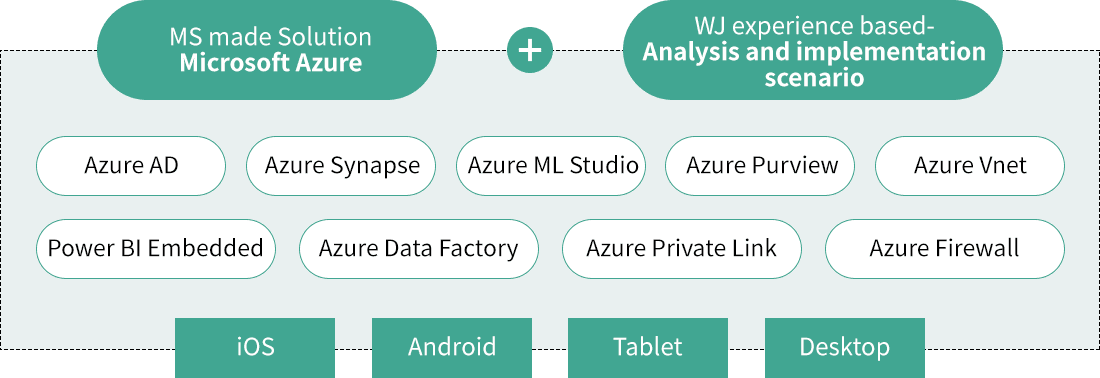
Woongjin supports client’ digital transformation by providing a stable Power Platform environment, fully tailored to their requirements, leveraging extensive experience in SAP and cloud infrastructure implementation.
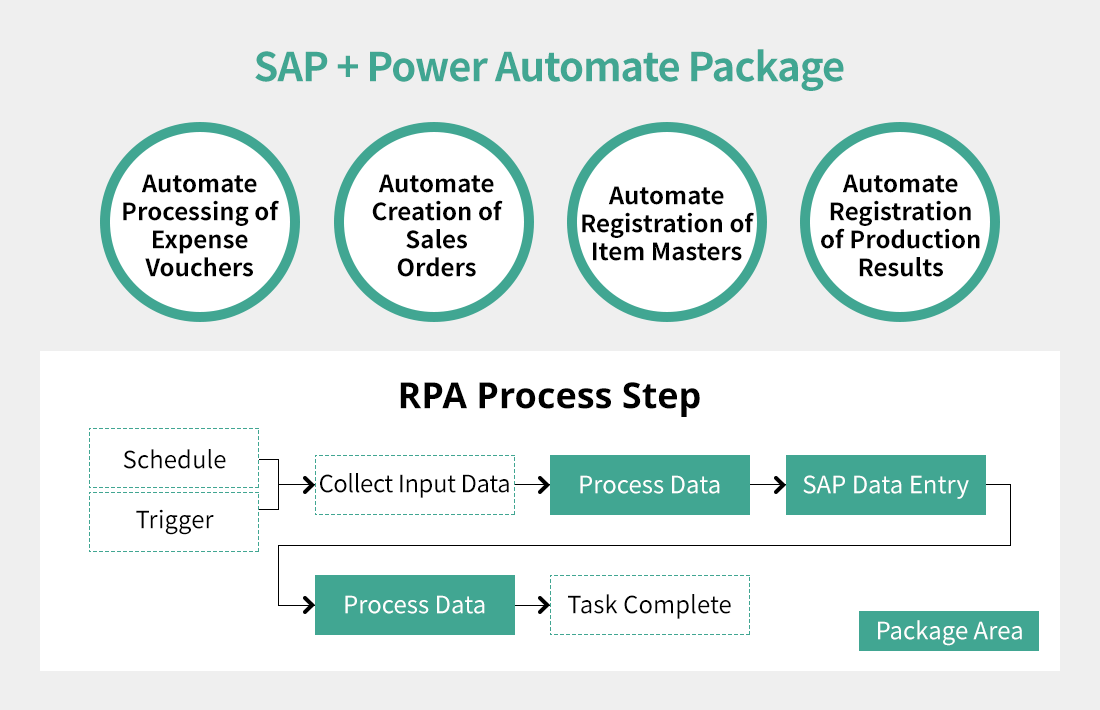
Power Platform Specialty By Woongjin - SAP + Power Automate Package
We standardize tasks for performing SAP-based operations in areas such as finance, sales, production, and master data management, packaging the key execution steps into comprehensive solutions.
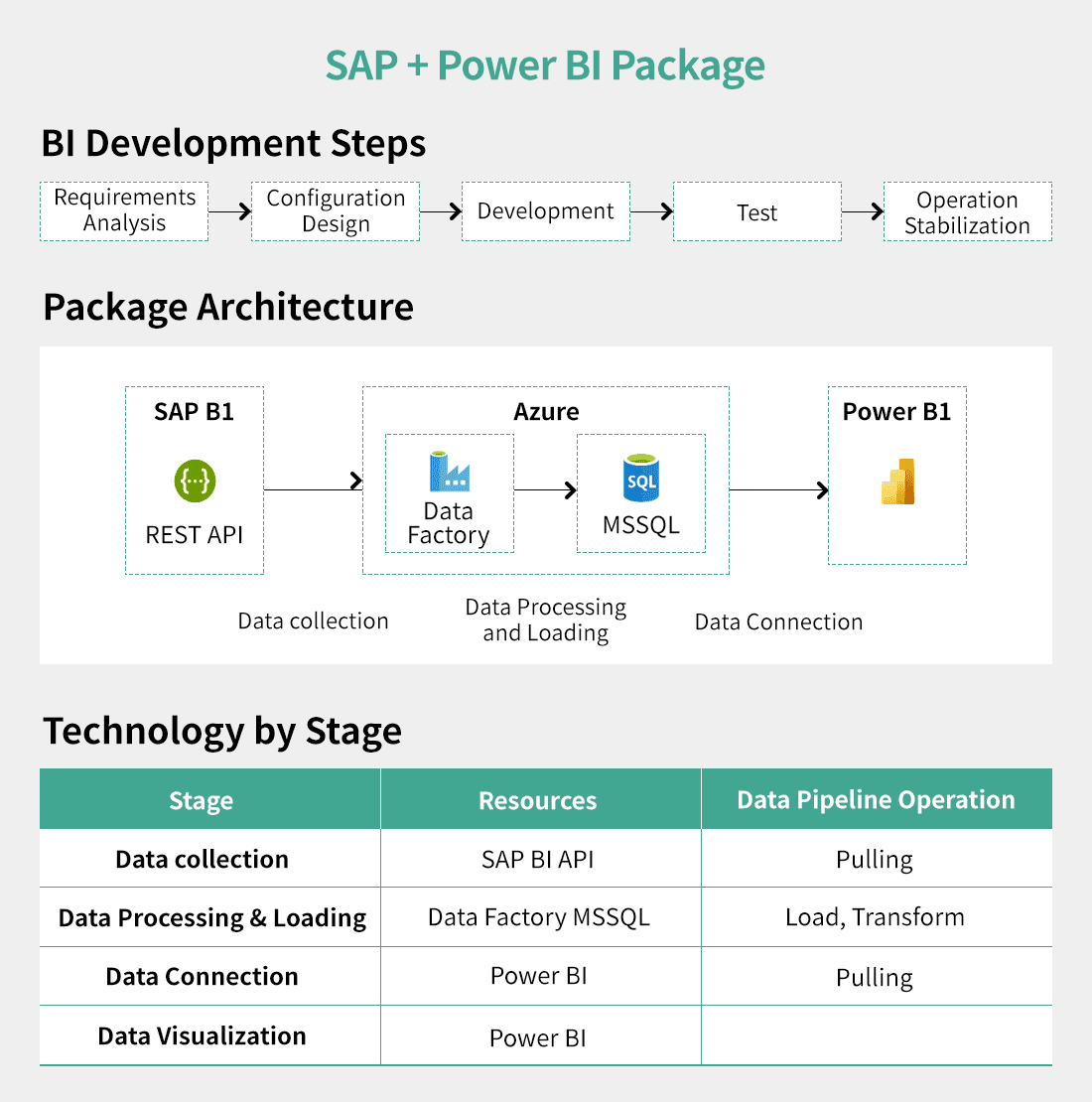
Power Platform Specialty By Woongjin - SAP + Power BI Package
We offer a packaged service for creating dynamic, real-time visualization reports based on SAP data.
Checklist for Introducing Power Platform
Successfully implementing Power Platform requires careful consideration across multiple dimensions. Woongjin offers professional consulting services to guide you through the key factors that should be reviewed.
-
1. Infrastructure Compatibility
Ensure compatibility with the company’s current IT infrastructure and technology stack, and assess data migration possibilities
-
2. Security and Compliance
Review alignment with the company’s security policies and regulations, including data security and privacy protection
-
3. Scalability
Determine the scope of Power Platform implementation, whether on a task, system, or user basis within the company
-
4. Support and Maintenance
Plan for ongoing management and maintenance after implementation, including strategies for administration and staffing
-
5. Cost Efficiency
Focus on creating high-value returns from the introduction of Power Platform

- E-mail : yongjun_lee@woongjin.com
FAQ
References Learn More
-
-
- Microsoft Power Automate
[Project Overview]
Woongjin ThinkBig was spending too much costs on handling the closing process for deposits and withdrawals. To address this, Woongjin ThinkBig implemented Microsoft's Power Automate RPA bots to automate the process. This resulted in improved work efficiency, reduced labor costs, and allowed employees to focus on higher-value tasks.
[Significance]
- Automated routine office tasks through RPA implementation
- Enabled employees to focus on its core business activities
-